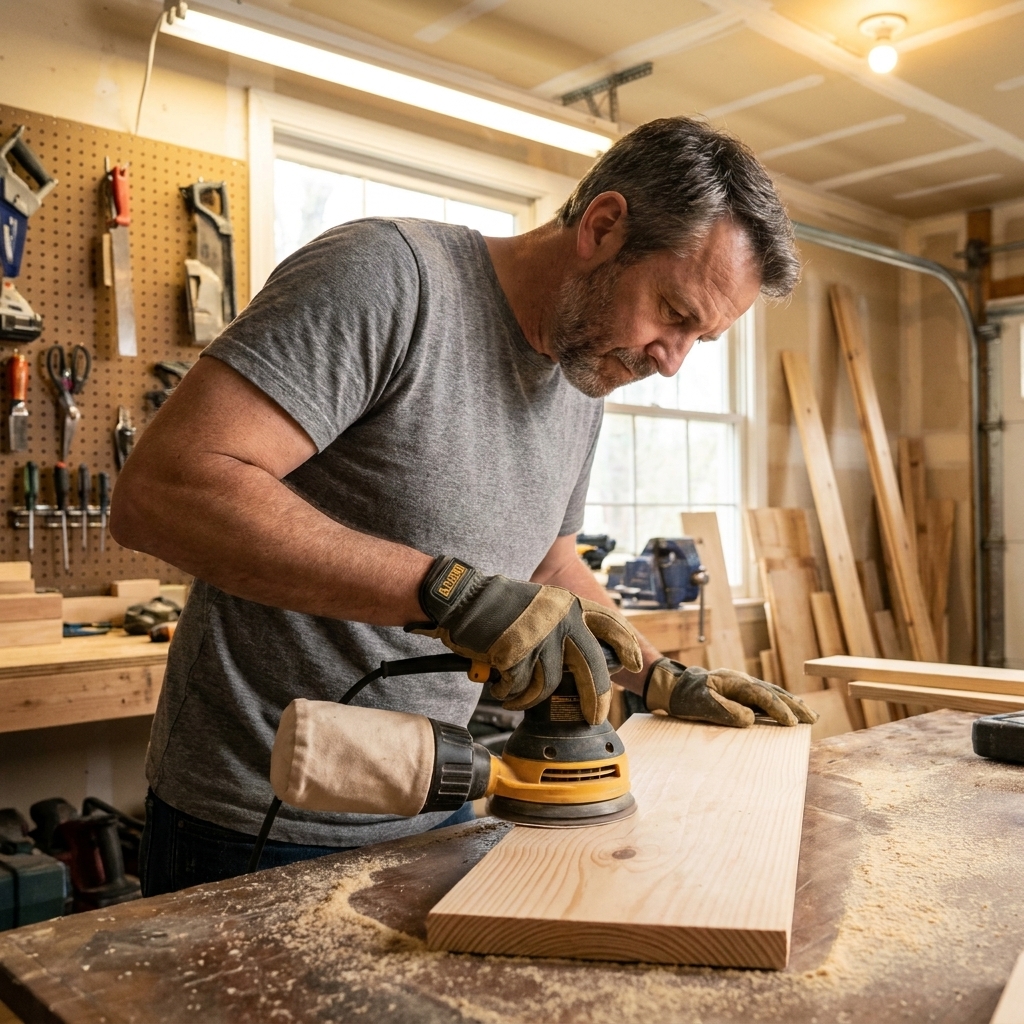
A homeowner-friendly guide to choosing a random orbital sander, selecting the right grits, and sanding wood to a flawless finish without swirl marks.
home improvement and DIY
Best Wet/Dry Shop Vacs for Every Budget

Marcus Hayes
Marcus Hayes is a lifelong DIY enthusiast and former residential carpenter who has spent the last decade renovating his 1970s fixer-upper. Through Tinksmith, he shares his hands-on experience to help fellow homeowners tackle repairs, choose the right tools, and build spaces they love without breaking the bank.
Published October 17, 2026
Updated October 17, 2026
If you have ever tried to clean drywall dust with a regular household vacuum, you already know the punchline. You end up with a clogged filter, a hot motor smell, and a living room that still looks like a powdered donut factory.
A wet/dry shop vacuum is one of the best “buy it once, use it forever” tools for DIY. Whether you are cleaning up a small plumbing mishap, vacuuming out a car, or collecting sawdust from a miter saw, the right shop vac makes the mess feel… manageable. Almost fun, if you squint.
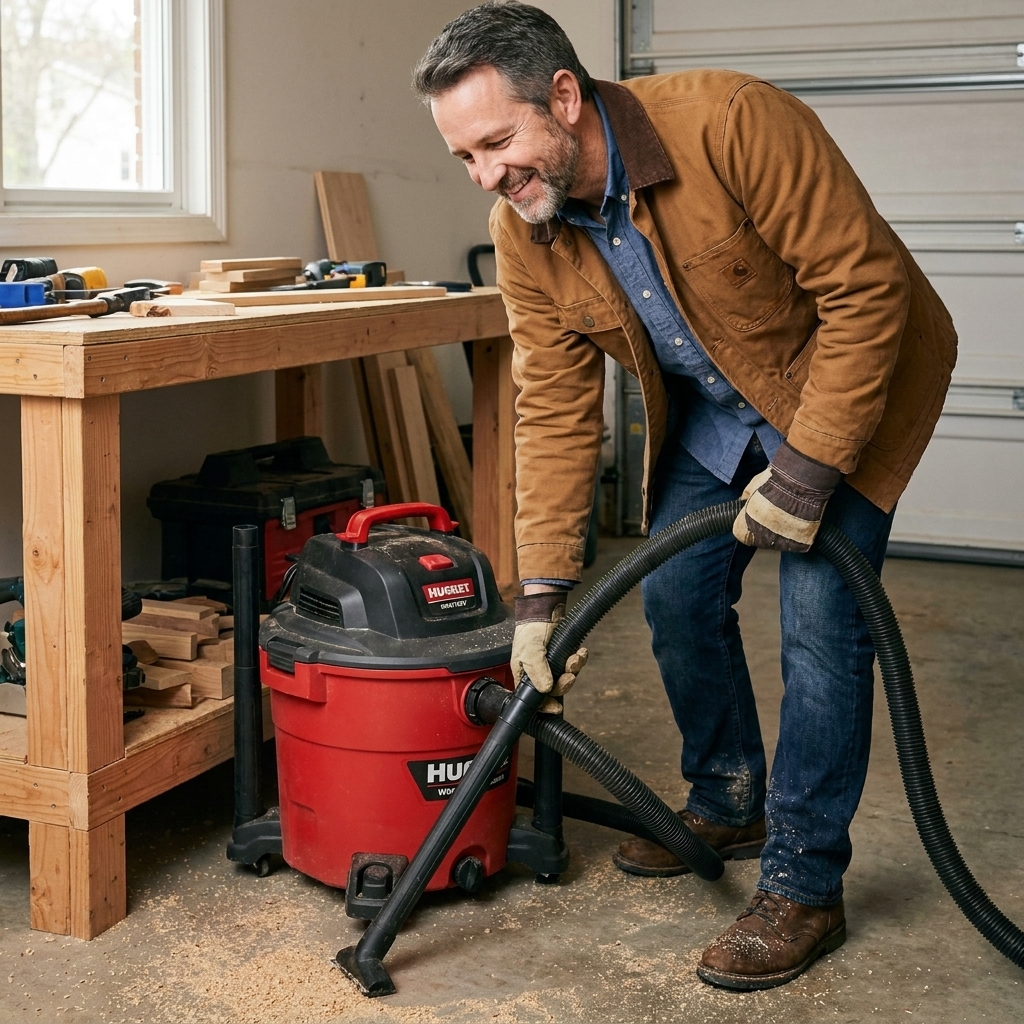
This guide breaks down what actually matters when shopping: suction power, tank size, filtration, noise, and the little features that make you smile on a Saturday afternoon instead of mutter new vocabulary.
Quick picks
If you just want a solid starting point, here are the categories I see most DIYers fall into. Below, I will explain how to choose and what to watch out for.
- Best all-around for DIY: 12 to 16 gallons, 5.0 to 6.5 peak HP class, cartridge filter with a good dust bag option
- Best for small spaces and quick grab-and-go: 4 to 6-gallon compact shop vac (or a small stackable unit)
- Best for fine dust (drywall, sanding): shop vac that accepts a HEPA cartridge filter and a disposable collection bag
- Best budget buy: 10 to 12-gallon unit with a proven warranty and easy-to-find filters
- Best for wet messes: larger tank with a wide floor nozzle and an easy drain
How to choose a wet/dry shop vac
Suction power: CFM vs water lift
Manufacturers love to shout about “peak horsepower.” It is not meaningless, but it is also not the number that tells you how well the shop vac will actually pick up the mess.
- CFM (cubic feet per minute): how much air the vacuum moves. Higher CFM is great for general cleanup and tool hookups.
- Water lift (sealed suction): how strongly the vacuum can pull when airflow is restricted. Higher water lift helps with more resistant pickups, like pulling water, dealing with long or narrow hoses, stubborn clogs, and restrictive tool ports.
Rule of thumb: for typical DIY, look for roughly 100 to 150 CFM on many mid-size units and a solid water lift rating (often listed in inches). Just know that CFM numbers are not always apples-to-apples because test methods vary, and real-world airflow drops with filters, hoses, and small nozzles.
If you plan to connect to tools a lot, prioritize CFM, a hose setup that matches your tools, and good filtration so performance does not fall off a cliff the moment the filter loads up.
Tank capacity: bigger is not always better
Bigger tanks mean fewer trips to empty, but also more bulk and more “where do I park this thing” problems.
- 4 to 6 gallons: great for cars, small messes, apartments, and quick cleanups.
- 10 to 12 gallons: sweet spot for most homeowners.
- 14 to 16 gallons: better for remodel debris, lots of sawdust, and bigger wet cleanups.
If you have stairs, a tight utility room, or a small garage, a compact 5-gallon shop vac you actually grab is better than a 16-gallon beast you avoid because it is wedged behind your lawnmower.
Filtration: the make-or-break feature for DIY dust
For messy home improvement, filtration is where you get your money’s worth.
- Standard cartridge filter: fine for general debris and sawdust.
- Fine dust filter: better for sanding and lighter construction dust.
- HEPA filter: best for drywall dust, old-house mystery dust, and anyone with allergies.
My drywall dust advice: use a bag plus a good cartridge filter (or HEPA if available). The bag catches most of the powder before it cakes onto your filter, which keeps suction up and makes emptying far less miserable.
Also, a quick reality check: HEPA is only as good as the seal. A HEPA cartridge on a leaky lid or a mis-seated filter can still let fine dust escape. Make sure the filter gasket is seated properly and the lid latches down tight.

Hose size and tool hookup
Most shop vacs come with a 2-1/2-inch hose, which is great for chunkier debris. For tool dust collection, a smaller hose or adapter often connects better (and sometimes works better on small tool ports).
- 2-1/2-inch: best for general cleanup, leaves, larger debris.
- 1-7/8-inch or smaller: better for many sanders, track saws, and some shop tools with dust ports.
Tool ports are all over the map. Many dust extractors use 27 mm or 36 mm hoses, while shop vacs tend to live in the 1-1/4-inch to 2-1/2-inch world. Translation: an inexpensive set of step-down adapters can save your sanity.
Look for a shop vac with a good selection of included adapters or an accessory ecosystem that is easy to find locally.
Noise and “real life” usability
Shop vacs are not known for whisper-quiet charm. If noise matters, check decibel ratings when provided and look for features like mufflers or “quiet” lines. Also pay attention to the basics:
- Cord length: longer is better. Tripping breakers because you ran a tiny extension cord is a rite of passage, but you do not need to repeat it weekly.
- Wheel quality: bigger wheels roll over cords and debris better.
- Storage: wand and accessory storage sounds boring until you lose the crevice tool for six months.
Best shop vac types
Best all-around: 12 to 16 gallons
This is the “weekend warrior does everything” category. Plenty of capacity, strong suction, and typically enough accessories to handle the garage, basement, and jobsite.
Best for: sawdust, garage cleanup, light demo debris, occasional wet messes
Look for: drain port, locking hose, widely available filters and bags
Best compact: 4 to 6 gallons
These shine when you want quick setup and easy storage. If you vacuum cars, grab sawdust around a miter saw, or need something to carry downstairs, a compact unit is gold.
Best for: car detailing, small workshops, quick cleanups, tight storage
Look for: stable footprint, decent hose length, easy top handle
Best for fine dust: HEPA-ready units
Drywall dust and sanding dust are where shop vacs either earn their keep or spray a cloud out the exhaust. If you do a lot of drywall work, consider a shop vac that supports HEPA filters and bags, or step up to a dust extractor if your budget allows.
Best for: drywall dust, sanding, old-house renovations, allergy-conscious homes
Look for: HEPA cartridge availability, sealed lid, bag compatibility, good filter seating
Best budget: no-frills, common filters
You can absolutely get a solid shop vac without spending premium money. The trick is picking a model with filters, bags, and replacement hoses you can find easily later.
Best for: basic household DIY, general garage messes, occasional wet pickup
Look for: good warranty, common filter model, sturdy latches
Shop vac vs dust extractor
A shop vac can do a respectable job on tool dust, especially for a single tool at a time. A dust extractor is what you buy when you are tired of dust management being a part-time job.
- Choose a shop vac if you want one machine for wet pickup, general cleanup, and occasional tool hookup.
- Consider a dust extractor if you do frequent sanding or drywall work, need better fine-dust containment, or want features like auto filter cleaning, tighter sealing, and often a tool-trigger outlet.
Think of it like this: a shop vac is a pickup truck. A dust extractor is a delivery van with shelves and a clipboard. Both haul stuff, but one is purpose-built for the routine.
Features that matter
Drain ports
If you ever vacuum more than a couple gallons of water, a drain port turns a back-straining dump into a simple hose-out. On larger tanks, it is a must-have.
Blower function
Many shop vacs can reverse airflow for blowing out leaves, clearing a clogged tool port, or blasting dust out of a corner. It is not a leaf blower replacement, but it is handy.
Filter cleaning (or at least easy access)
Some units have built-in filter cleaning mechanisms. Even without that, you want tool-free access so you can knock dust off the pleats outside. Your lungs will thank you, and your shop vac will stop sounding like it is breathing through a straw.
Anti-static hoses (nice, not mandatory)
Dry dust and plastic hoses can build static, which makes dust cling and can give you a little zap. Anti-static hoses reduce that. If you do lots of sanding or fine dust work, it is worth considering.
Safety and best practices
Never vacuum fine dust without the right setup
Drywall dust can clog filters fast and can also blow back out the exhaust if filtration is poor. Use a bag, use a fine dust or HEPA filter when possible, and empty the tank before it is overflowing. Keep the filter seated correctly, and never run the shop vac without a filter in place.
If you can safely vent the exhaust outdoors (and it makes sense for your setup), it can help keep the finest haze out of your living space. Just be mindful of where that dust is going.
For wet pickup, remove the dust bag
If you have a dust bag installed, take it out before wet pickup unless the manufacturer says it is a wet-rated bag. Bags and water usually turn into papier-mache surprises.
Know what you should not vacuum
- Hot ashes: use an ash vacuum. Ashes can stay hot long after they look cold, and a shop vac can melt, smolder, or worse.
- Lead paint or asbestos-related debris: do not assume a standard shop vac is safe. Hazardous dust cleanup may require a sealed, HEPA-rated vacuum designed for that work, proper containment, PPE, and compliance with local rules.
- Large sharp objects: screws and nails are fine, but big sharp scraps can puncture hoses or damage the tank.
Buying checklist
- Capacity that fits your space: 10 to 12 gallons is the default sweet spot
- Strong airflow: roughly 100 to 150 CFM for many mid-size units (when listed, and remembering test methods vary)
- Filter support: can you buy fine dust or HEPA filters for this model?
- Bag compatibility: does it accept disposable collection bags?
- Hose and accessories: are adapters included for the tools you own?
- Drain port on larger tanks
- Replacement parts availability: filters, hose, casters, latches
FAQ
Is peak horsepower a real measurement?
It is “real,” but it is not the whole story. Peak HP is typically a short, momentary measurement under ideal conditions. For day-to-day performance, CFM and water lift are more useful, along with things that do not fit nicely on a sticker: build quality, sealing, and how well it holds suction as the filter loads. If a manufacturer lists running amps and duty cycle info, that can be more telling than peak HP hype.
Do I need a HEPA shop vac for home projects?
Not always. For general garage cleanup and sawdust, a standard cartridge filter is usually fine. For drywall dust, sanding dust, and allergy concerns, HEPA is worth it, especially paired with a bag and a well-sealed lid and filter.
Can I use a shop vac as dust collection for tools?
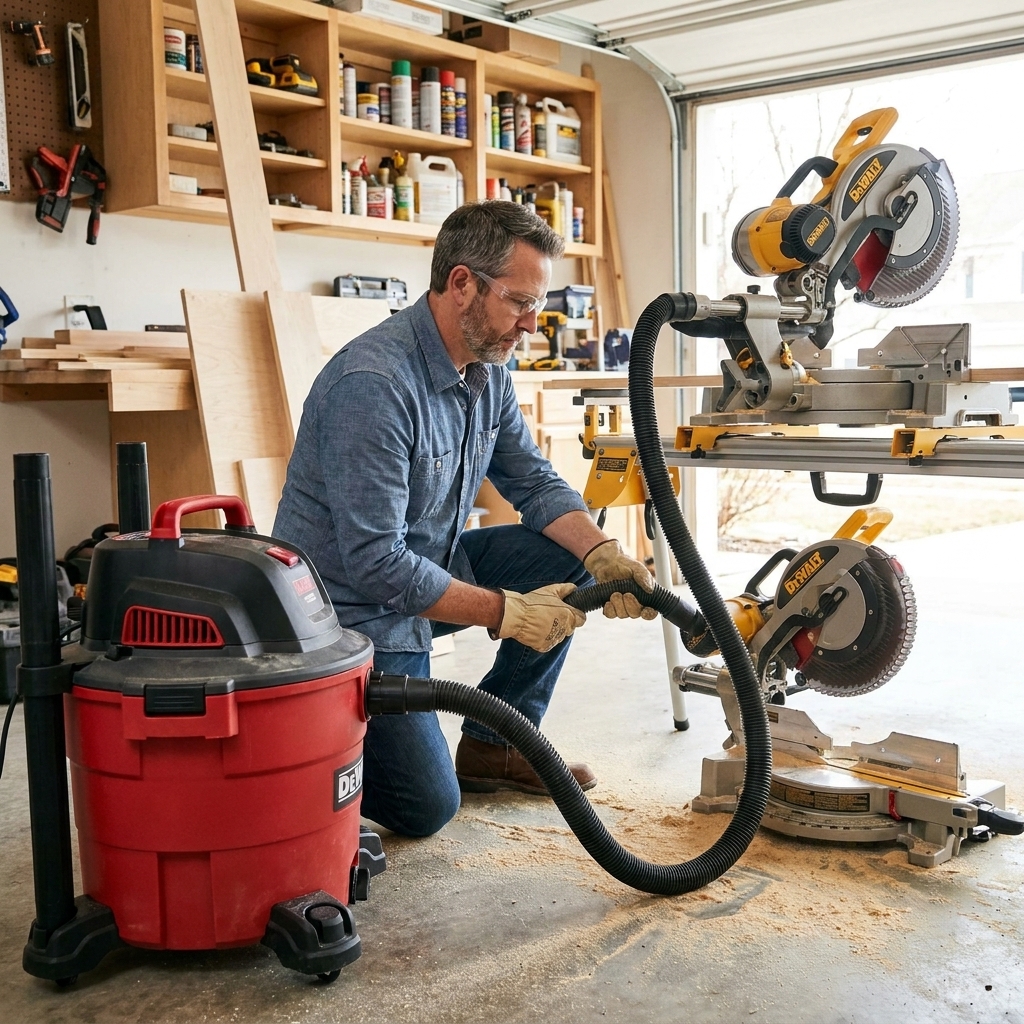
Yes, with some caveats. It works well for single-tool hookups like a miter saw, sander, or router, especially with the right adapters and a clean filter. If you are running multiple tools or bigger stationary machines, a dedicated dust collector or dust extractor setup may be a better long-term plan.
Why does my shop vac blow dust out the exhaust?
Usually one of these: the filter is wrong for the dust, the filter is clogged, the filter is seated poorly, there is no bag for fine dust, the lid is not sealing, or the filter is damaged. Check the gasket and lid seal, then upgrade the filter and add a bag if you are doing fine-dust work.
How often should I replace the filter?
Replace it when suction stays weak even after cleaning, when the pleats are damaged, or when you see dust bypass (dust inside the motor area or blowing out despite a good seal). If you use bags for fine dust, filters last much longer.
Bottom line
The best wet/dry shop vac is the one that matches your mess. For most homeowners, a 10 to 12-gallon shop vac with strong airflow, a readily available filter, and bag compatibility is the smartest buy. If you do drywall or sanding often, bump filtration to HEPA if you can, and make sure the seals are actually doing their job. If you mainly clean the car and chase sawdust around a benchtop, go compact and save your back.
And if your current plan is still “use the household vacuum and hope,” I say this with love: your vacuum did not sign up for that kind of abuse.