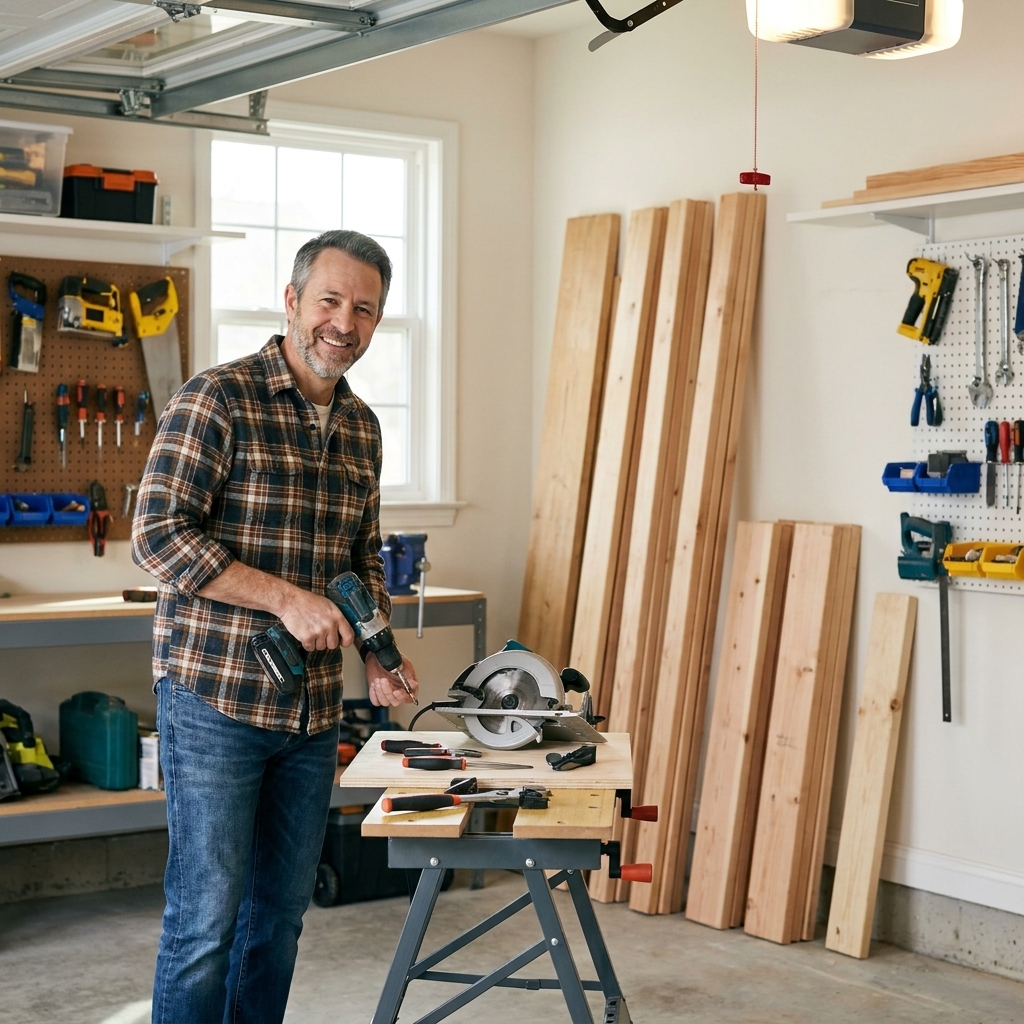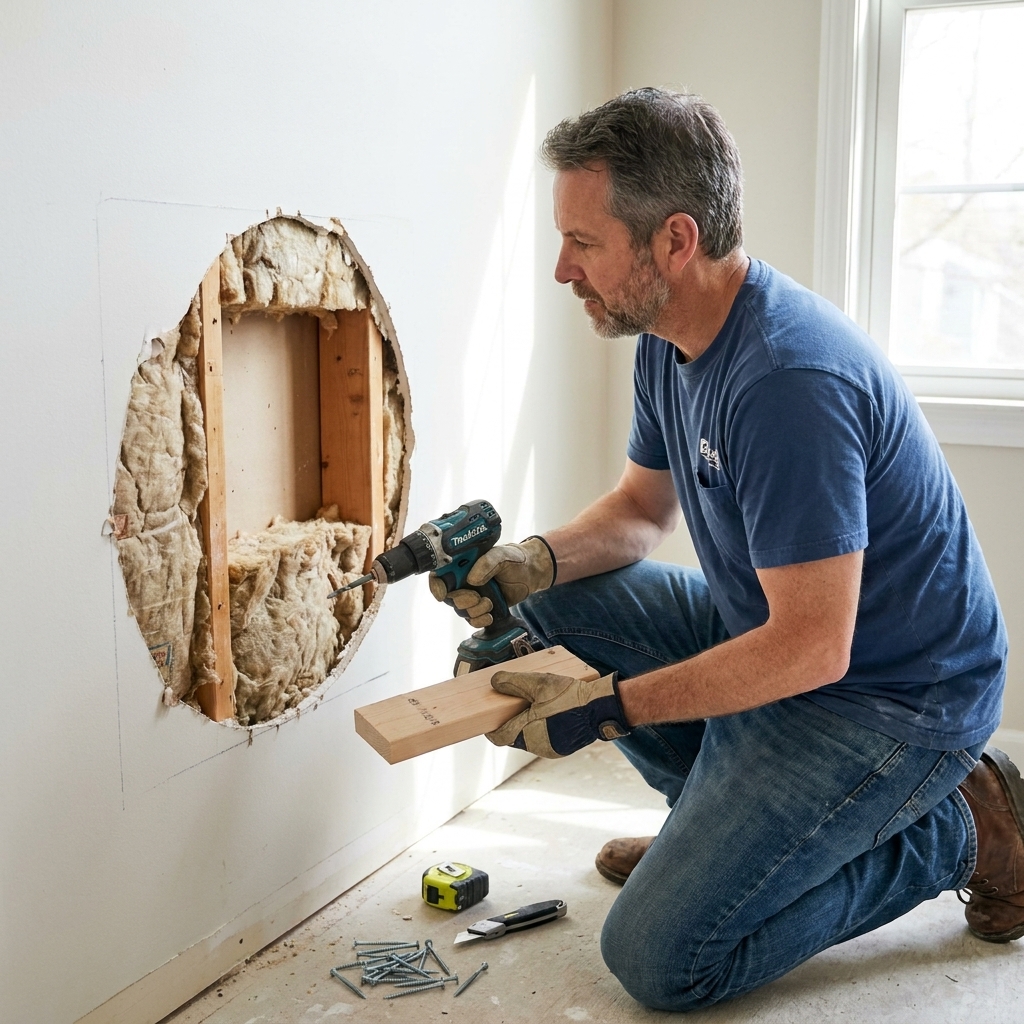
Build a reliable homeowner tool kit with these 15 hand-tool essentials. Includes what to buy, what to skip, and the repairs each tool handles best.
home improvement and DIY
10 Must-Have Power Tools for First-Time Homeowners

Marcus Hayes
Marcus Hayes is a lifelong DIY enthusiast and former residential carpenter who has spent the last decade renovating his 1970s fixer-upper. Through Tinksmith, he shares his hands-on experience to help fellow homeowners tackle repairs, choose the right tools, and build spaces they love without breaking the bank.
Published October 17, 2026
Updated October 17, 2026
If you just bought a home, congrats. You now own a building that will politely request your attention every weekend. The good news is you do not need a garage full of shiny gadgets to keep up. You need a small lineup of versatile power tools that can handle 80 percent of the jobs you will face: hanging shelves, fixing trim, patching drywall, building storage, and chasing down the occasional rattle that suddenly became “a thing.”
This list is the starter set I wish someone had handed me when we bought our very outdated 1970s place. It is homeowner-focused, budget-aware, and designed to grow with you.
Before you buy: 3 money savers
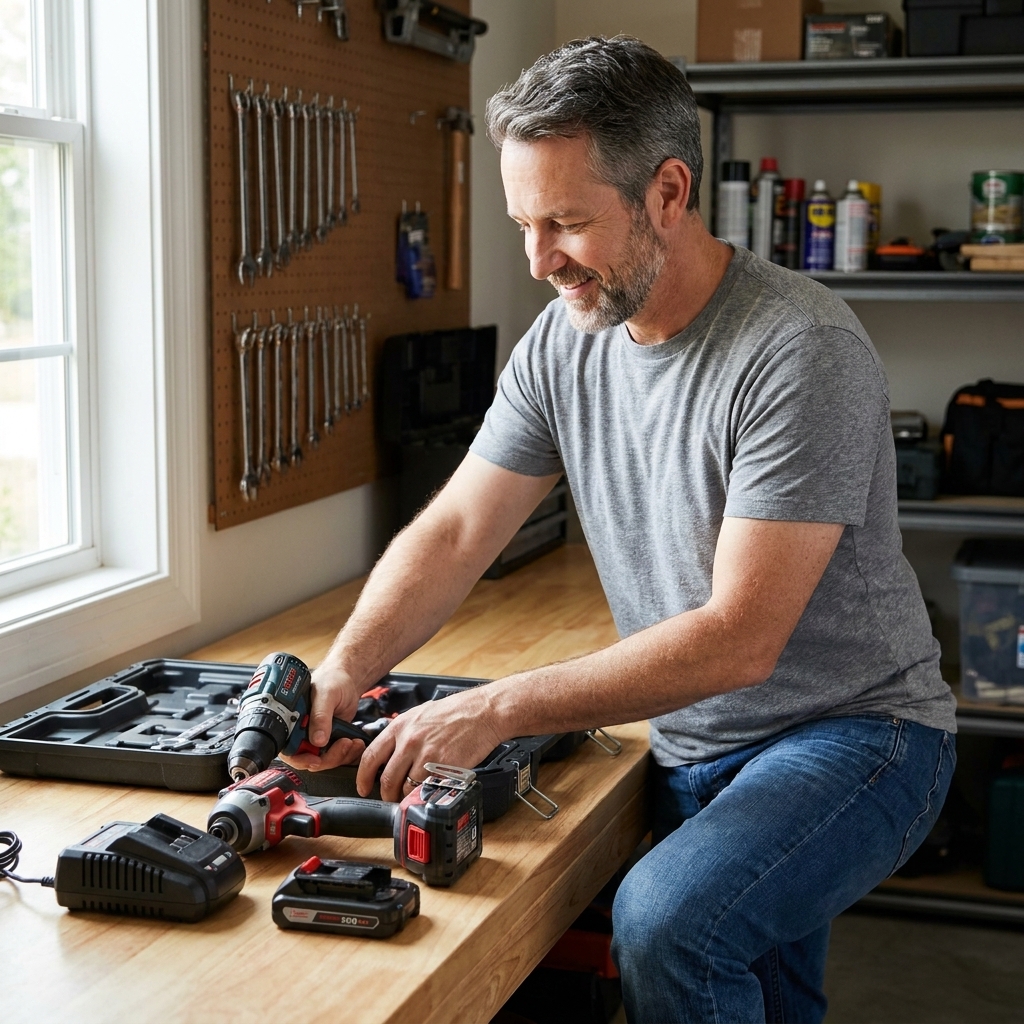
1) Pick a battery platform and stick with it
For cordless tools, the cheapest “hack” is loyalty. When your drill, saw, and multi-tool all use the same battery, you save big on chargers and spares. For most homeowners, an 18V or “20V Max” class system is the sweet spot for power, tool selection, and price. (Fun fact: most “20V Max” tools are the same 18V class tools, just marketed by peak voltage instead of nominal.)
2) Buy the tool you need, then upgrade the blade or bit
Most frustration comes from dull blades and bargain bits, not the tool itself. A mid-tier saw with a great blade often cuts better than a premium saw running the so-so blade it came with. That said, tool quality still shows up in cut accuracy, vibration, dust control, and safety features, so buy the best you can comfortably afford.
3) Plan for dust control on day one
Drywall and wood dust get everywhere, including your lungs. If you buy only one “adulting” accessory, make it a shop vac and real respiratory protection. Look for a HEPA filter or HEPA-rated bags if your vac supports them, and aim for at least an N95 mask for dusty work. If you cut masonry or deal with heavy dust, step up to a P100 respirator.
The 10 must-have power tools
These are in a practical order for most new homeowners. If you are buying gradually, start at the top.
1) Drill/driver plus impact driver (combo kit)
If you buy one power tool, make it a cordless drill/driver. If you can swing a combo kit, get a drill/driver plus an impact driver. The drill/driver handles holes and light driving. The impact driver handles long screws without stripping heads or wrecking your wrist.
- Best for: curtain rods, shelves, furniture assembly, pilot holes, small repairs
- Look for: 2-speed gearbox, clutch settings, 1/2-inch chuck, LED light, two batteries (at least 2.0Ah, ideally one larger like 4.0Ah)
- Why two batteries matter: one runs while the other charges, which keeps “quick projects” from turning into “waiting projects”
- Skip the gimmicks: ultra-high torque numbers rarely matter for homeowner jobs
2) Impact driver (if you did not get the combo)
Driving 3-inch deck screws with a drill/driver is like eating soup with a fork. You can do it, but you will question your choices. An impact driver makes building projects and repairs faster and cleaner.
- Best for: building garage shelving, fence repairs, hanging heavy hooks, assembling pergolas and playsets
- Look for: variable speed trigger, 1/4-inch hex chuck, multiple speed modes
- Pro tip: keep a set of impact-rated bits. Regular bits snap and then you get to learn new words.
3) Oscillating multi-tool
This is the “I cannot believe this exists” tool for homeowners. It cuts flush, fits into corners, scrapes, sands, and solves weird problems that no other tool solves neatly.
- Best for: trimming door jambs for new flooring, cutting nails in tight spots, plunge cuts in drywall, removing old caulk and grout
- Look for: tool-free blade change, variable speed dial, a starter pack of blades
- Worth it: carbide grout blade if you ever touch tile
4) Circular saw
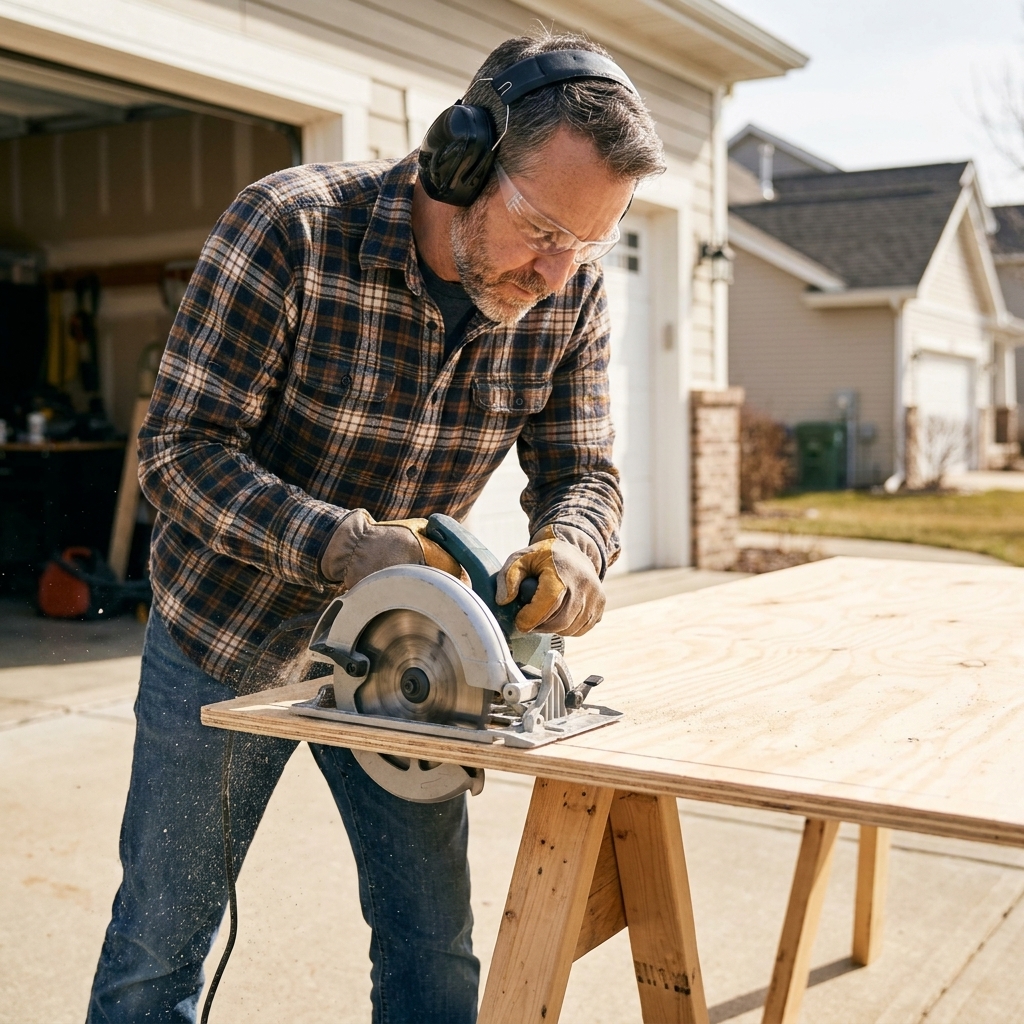
A circular saw is your entry ticket to real DIY: cutting plywood, trimming lumber, and building storage projects. With a straightedge guide, it can even make surprisingly clean cuts for shelves and panels.
- Best for: cutting 2x lumber, plywood, trim boards, basic framing for small projects
- Look for: 7-1/4 inch blade (most versatile), bevel adjustment, electric brake (stops the blade quickly), comfortable guard action
- Do this immediately: upgrade to a quality general-purpose blade. The included blade is often… how do I put this… optimistic.
5) Random orbital sander
If you plan to paint, stain, refinish, or clean up patched areas, sanding is part of the deal. A random orbital sander leaves fewer swirl marks than a basic palm sander and makes quick work of smoothing wood.
- Best for: refinishing furniture, smoothing shelves, scuff-sanding before paint, easing sharp edges
- Also useful for: small drywall patches, especially feathering edges before primer (use light pressure, the right grit, and dust extraction)
- Look for: hook-and-loop pads, variable speed, dust bag or vacuum port
- Reality check: for big drywall areas, a sanding sponge or pole sander is usually easier and less messy
- Budget move: buy better sanding discs. Cheap discs clog fast and turn sanding into a cardio workout.
6) Shop vacuum (wet/dry vac)
Not glamorous, absolutely essential. A shop vac cleans up sawdust, drywall dust, broken glass, little floods, and the mystery debris that appears when you open an old cabinet.
- Best for: cleanup, dust collection, vacuuming cars and garages
- Also helpful for: pulling standing water out of a sink trap and clearing minor clogs from the drain line (messy, but it can work)
- Look for: 5 to 9 gallon capacity for most homeowners, standard hose size, readily available filters
- Must-have add-on: fine dust or HEPA filter and a pack of bags if your model supports them
- Caution: do not vacuum sewage or unknown mystery liquids without the right filter setup and protective gear
7) Nailer for trim (brad or finish)
Once you hang trim with a nailer, you will never want to go back to hammering finish nails while balancing a piece of baseboard with your knee. Nailers are also fantastic for quick, clean assembly of small woodworking projects.
- Best for: baseboards and casing, shoe molding, small built-ins, paneling, repairs
- What to choose: an 18-gauge brad nailer is great for lighter trim, small molding, and tacking pieces while glue sets. If you are installing thicker baseboards or door casing and want a more standard fastening approach, consider a 16-gauge (or 15-gauge) finish nailer.
- Look for: depth adjustment, no-mar tip
- Heads-up: trim still needs smart fastening. Hit studs where you can, use the right nail length, and use adhesive where appropriate. Nails are not magic, just very persuasive.
8) Jigsaw
A jigsaw is your curve cutter and your “I need to cut this inside a cabinet without dismantling the universe” tool. It is less intimidating than a circular saw and great for odd shapes.
- Best for: cutting around outlets in paneling, notches in shelving, curves in plywood, flooring cutouts
- Look for: orbital action settings, tool-less blade change, solid base plate
- Pro tip: keep a few blade types: clean wood, fast wood, and metal. The right blade matters more than you think.
9) Angle grinder (with the right wheel)
This is the tool you do not use every day, but when you need it, nothing else is as fast. With a cut-off wheel, it slices metal. With a flap disc, it cleans rust and smooths rough edges. With a diamond blade, it can cut masonry and tile.
- Best for: cutting bolts, removing rust, trimming metal, quick masonry cuts outdoors
- Look for: 4-1/2 inch size, adjustable guard, comfortable side handle
- Safety note: wear eye protection and gloves, position the guard correctly, and keep a firm two-handed grip. Angle grinders do not do “oops.”
- Silica warning: cutting masonry and tile can create silica dust. Do it outdoors when possible, wear at least an N95 (P100 is better), and consider wet cutting or proper dust collection.
10) Rotary tool (Dremel-style)
Think of a rotary tool as a power tool for tiny jobs. It is great for sanding in corners, light grinding, cutting small fasteners, and detail work where bigger tools feel like overkill.
- Best for: small repairs, trimming plastic, sharpening, cleaning grout haze, hobby-level tasks that show up in homeownership
- Look for: variable speed, comfortable grip, a starter accessory kit
- Reality check: it is not a replacement for an angle grinder. It is a detail specialist.
What to buy first
The “I just moved in” starter
- Cordless drill/driver (or combo kit)
- Shop vacuum
- Oscillating multi-tool
The “weekend project” starter
- Drill/driver plus impact driver
- Circular saw
- Random orbital sander
The “trim and upgrades” starter
- Nailer for trim
- Oscillating multi-tool
- Shop vacuum
If budget is tight, start with the first bundle and build outward. It covers the widest range of repairs without forcing you into big lumber projects right away.
Hand tools you still need
I know, I know. This is a power tool list. But a few basic hand tools are the difference between “I can fix this tonight” and “I am stuck until Saturday.”
- Stud finder: makes hanging anything heavy much less exciting
- Utility knife: opening boxes, scoring drywall, trimming shims
- Pry bar: trim removal and gentle persuasion
- Hammer: because not everything deserves a battery
- Adjustable wrench and pliers: small plumbing and hardware tasks
- Screwdrivers: sometimes the right tool is the quiet tool
Accessories that matter
Tools are the engine. Accessories are the tires. Here is what I keep within arm’s reach.
- Drill bits: a basic twist bit set plus a few spade bits for larger holes
- Driver bits: impact-rated Phillips, square, and Torx in common sizes
- Measuring and layout: tape measure, speed square, pencil, and a small level
- Clamps: at least two 6-inch and two 12-inch clamps
- Saw support: a pair of sawhorses and a sheet of rigid foam for breaking down plywood safely
- Blades: one good circular saw blade (general purpose), jigsaw blades (wood and metal), multi-tool blade assortment
- Charging basics: a second battery is great, and a fast charger is a sanity saver if you go cordless-heavy
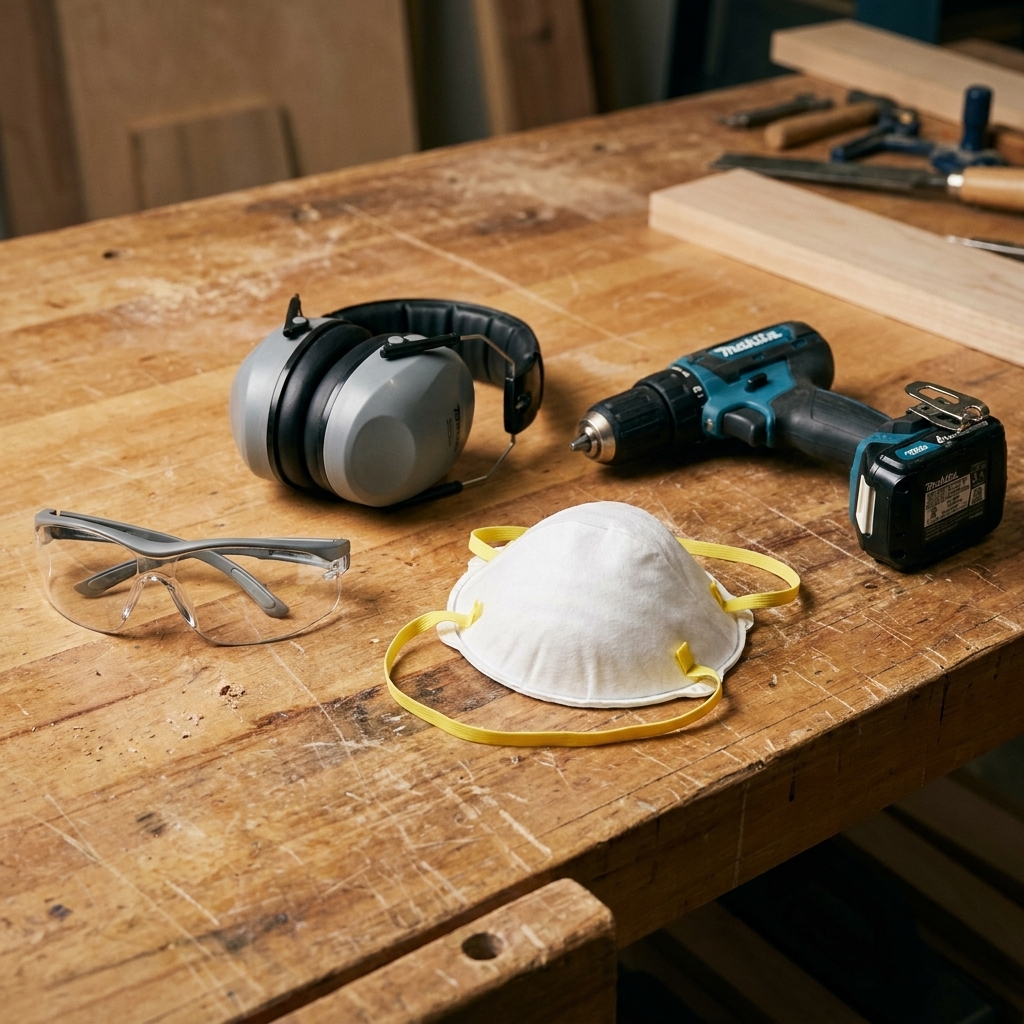
- PPE: safety glasses, hearing protection, and a properly rated dust mask or respirator
Safety basics
- Wear eye protection by default. If you are cutting, grinding, or drilling, glasses go on. No debate.
- Hearing protection is not optional with saws and grinders. Your future self likes quiet mornings.
- Control the workpiece. Clamp it, support it, or both. Most sketchy moments come from wood shifting mid-cut.
- Respect kickback. With circular saws, stand slightly to the side of the cut line, keep a firm grip, and do not bind the blade in the kerf.
- Let the tool do the work. Forcing a cut leads to kickback, broken blades, and angry noises.
- Unplug or remove the battery before changing blades. This is the kind of habit that prevents very bad days.
- Take dust seriously. Wood, drywall, and especially masonry dust can be a real health hazard. Use extraction, ventilation, and the right mask for the job.
FAQ
Should a first-time homeowner go corded or cordless?
For drills and drivers, cordless is the clear winner. For sanders and shop vacs, corded often gives you more power per dollar. For saws, either works. If you do occasional projects, cordless is convenient. If you do long sessions cutting sheet goods, corded can be easier on the wallet and you never wait on batteries.
Do I need a miter saw right away?
Not always. A miter saw is awesome for trim and repeated crosscuts, but it is not mandatory for your first round of homeowner projects. Many people can get by with a circular saw and a speed square or simple cut guide at the start.
Is it worth buying used power tools?
Sometimes, yes. Corded tools are generally safer bets used than cordless tools, because batteries are expensive and may be worn out. If you buy used, check for smooth bearings, intact cords, functioning guards, and no burning smell when it runs. If it smells like toasted electrical regret, walk away.
What brand should I buy?
Pick a reputable battery platform with a wide tool lineup in your price range and local availability. The “best” brand is the one you can afford, find accessories for easily, and expand over time without rebuying batteries.
Parting advice
Start with the tools that remove friction from everyday homeownership. You want the kind of kit that makes you say, “Sure, I can knock that out after dinner,” not “Let me research this for three weekends and then hire it out anyway.” Buy smart, keep blades sharp, collect dust like a responsible adult, and remember: every DIYer you admire has a box of mistakes in the garage. Mine is labeled “learning experiences” so it feels more expensive.