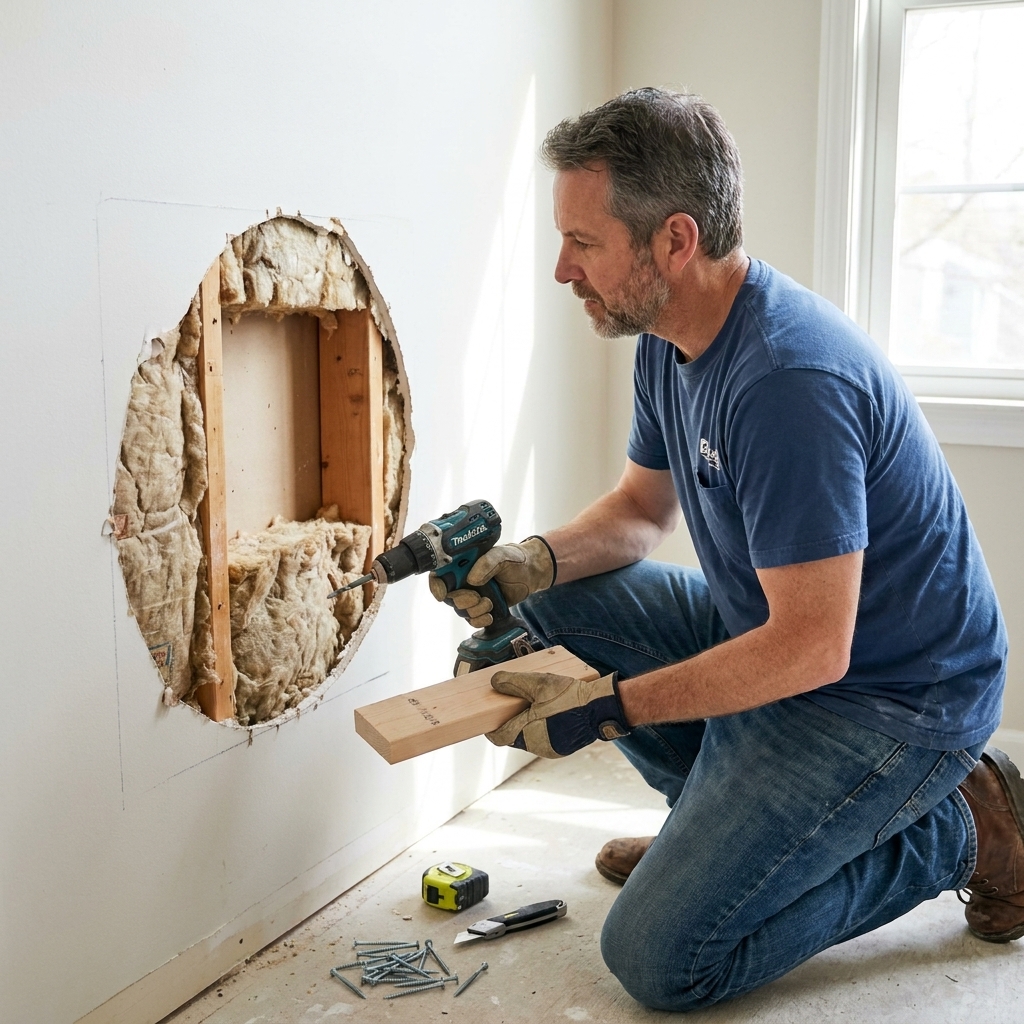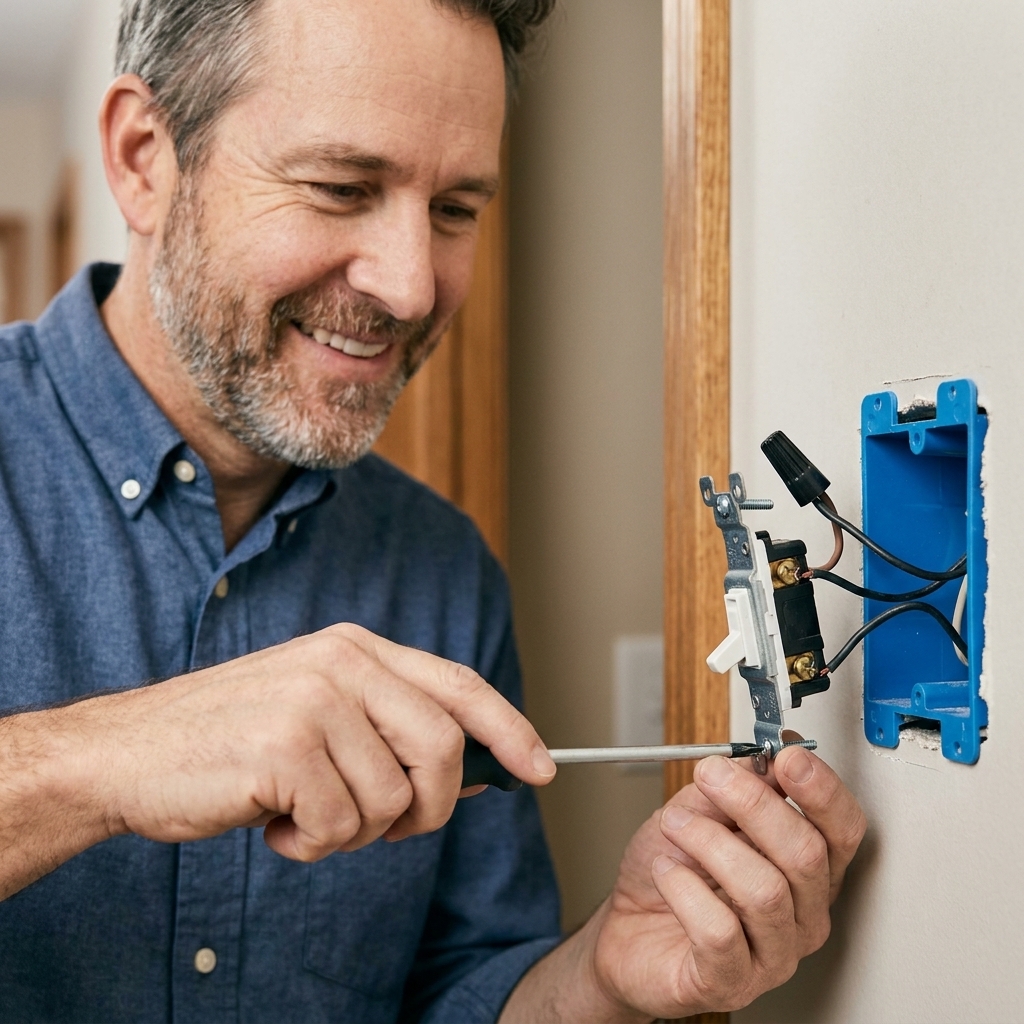
Choosing between acrylic latex caulk and 100% silicone can make or break a bathroom repair. Here’s where each works best, what to buy, and how to apply it ...
home improvement and DIY
15 Must-Have Hand Tools Every Homeowner Needs

Marcus Hayes
Marcus Hayes is a lifelong DIY enthusiast and former residential carpenter who has spent the last decade renovating his 1970s fixer-upper. Through Tinksmith, he shares his hands-on experience to help fellow homeowners tackle repairs, choose the right tools, and build spaces they love without breaking the bank.
Published October 17, 2026
Updated October 17, 2026
If you own a home long enough, you will eventually meet the Three Horsemen of Weekend Repairs: the wobbly cabinet door, the mystery leak, and the picture frame that refuses to hang straight. The good news is you do not need a garage full of tools to handle most everyday fixes. You need a small set of dependable hand tools you can actually find when you need them.
This list is the “basic repairs” sweet spot: tools that solve real problems, earn their keep, and do not require a second mortgage. I will also share what to look for when buying, plus a few use cases so you can picture each tool in action.

What makes a tool worth owning
- Comfort matters. If it hurts to use, you will avoid it. Look for padded grips, smooth edges, and solid balance.
- Precision beats brute force. Tools that fit fasteners well reduce stripped screws and rounded nuts.
- Durability pays for itself. For core tools, buy the best you can reasonably afford and keep them dry and clean.
- Storage is part of the tool. A small toolbox or tote keeps your kit usable instead of becoming a scavenger hunt.
The 15 must-have hand tools
1) 16 oz. claw hammer
Why you need it: Hanging pictures, tapping boards into place, pulling nails, light demolition.
Buying advice: A 16 oz. hammer is the do-it-all size for homeowners. (If you are framing walls all weekend, a heavier hammer makes that easier, but you do not need it for most repairs.) Choose a smooth face (less likely to leave dents) and a comfortable handle. Steel with a shock-reducing grip or a quality fiberglass handle both work well.
Common jobs: Reattach a loose baseboard, pull a proud finish nail, hang a hook, gently persuade a stuck shim.
2) Tape measure (25 ft.)
Why you need it: Measuring for curtains, furniture, shelves, replacement parts, and “Will this fit?” moments.
Buying advice: A 25 ft. tape hits the balance between reach and portability. As a general guideline, aim for roughly 7 ft. or more of standout (how far it extends before it flops), plus a readable blade and a sturdy lock. Standout varies by tape width and brand, so treat it as a nice-to-have, not a promise.
Common jobs: Measure a door slab, check stud spacing (often 16 in. on center, sometimes 24 in.), confirm appliance clearances before delivery.
3) Torpedo level (9 in. or 12 in.)
Why you need it: Hanging anything straight, checking if shelves sag, and making sure appliances are sitting reasonably level for proper door closing and fewer vibration issues.
Buying advice: Get one with strong magnets if you ever work near metal studs, ductwork, or electrical panels. V-groove edges are handy for pipe.
Common jobs: Level a towel bar, align cabinet pulls, check a washing machine that likes to walk across the laundry room.
4) Screwdriver set (quality #2 Phillips and 1/4 in. flathead)
Why you need it: Tightening hardware, outlet and switch plates, appliance panels, door handles.
Buying advice: If you only buy two, make them a #2 Phillips and a 1/4 in. flathead with hardened tips. Cheap drivers cam out and strip screws, then you get to learn new words.
Common jobs: Tighten a loose doorknob, swap a thermostat cover, adjust cabinet hinges.
5) Multi-bit screwdriver
Why you need it: Quick access to common bits without digging through a drawer of random singles.
Buying advice: Look for a driver with secure bit storage and minimal wobble in the bit holder. A ratcheting model is nice, but not required. Bonus points if the bit selection includes common sizes of Phillips, flat, Torx, and Robertson (square), because modern hardware loves variety.
Common jobs: Assemble furniture, tighten drawer slides, remove vent covers.
6) Adjustable wrench (8 in. or 10 in.)
Why you need it: Plumbing supply lines, faucet nuts, threaded fittings, and general “one wrench fits many” work.
Buying advice: An 8 in. is easier to fit under sinks, a 10 in. gives more leverage. If you can swing it, get both eventually. Choose one with smooth jaw adjustment and minimal slop.
Common jobs: Snug a toilet supply line nut, adjust a showerhead arm, hold a nut while you turn a bolt. For plumbing, “snug” is the goal. Cranking down can crack plastic parts or deform washers.
7) Tongue-and-groove pliers (10 in.)
Why you need it: Gripping larger fittings, turning stubborn connections, holding awkward shapes.
Buying advice: Aim for a solid locking groove that does not slip under load. 10 in. is the homeowner standard, and it fits most under-sink situations.
Common jobs: Remove an old shower arm, grip a rounded nut, hold a trap adapter while you loosen another connection.
8) Needle-nose pliers
Why you need it: Reaching into tight spaces, bending wire, pulling small fasteners.
Buying advice: Look for a fine tip that meets cleanly and grips well. A version with a built-in wire cutter is handy for light work.
Common jobs: Retrieve a dropped screw behind a dryer, bend a picture-hanging hook, pull a cotter pin.
9) Slip-joint pliers
Why you need it: General gripping when tongue-and-groove pliers are too bulky.
Buying advice: Choose a comfortable handle and a solid pivot with two or three jaw positions. These are your everyday “grab it” pliers.
Common jobs: Hold a nut while tightening a bolt, pinch a small clamp, gently twist out a stripped plastic anchor.
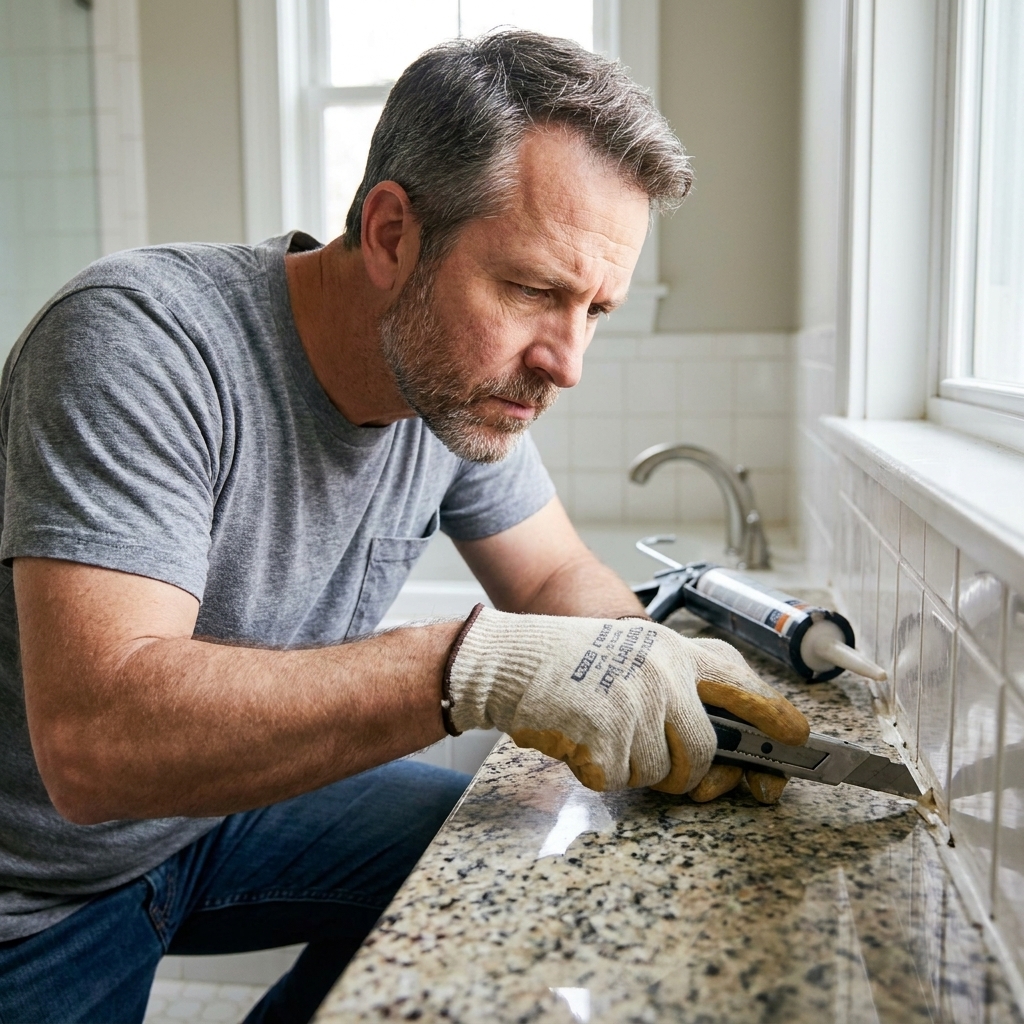
10) Utility knife (retractable)
Why you need it: Cutting drywall paper, caulk, tape, carpet, packaging, shingles, and more.
Buying advice: Retractable is safer. A quick-change blade mechanism saves time. Keep fresh blades on hand, because dull blades are how perfectly reasonable people end up with band-aids.
Common jobs: Score caulk before removing trim, cut down cardboard and packaging, cut back torn drywall paper around a hole.
11) Putty knife set (1.5 in. and 3 in.)
Why you need it: Spackle, scraping, patching, gentle prying, removing stickers, cleaning glass.
Buying advice: Get at least two widths. A stiff 1.5 in. is great for small patches, and a 3 in. helps feather compound smoothly. Stainless blades clean up easier.
Common jobs: Patch nail holes, scrape loose paint, remove old caulk residue.
12) Stud finder (basic model)
Why you need it: Hanging heavy items safely and finding solid framing for shelves, TVs, mirrors, and grab bars.
Buying advice: A simple electronic stud finder is fine. The “best” one is the one you actually trust. Calibrate it per the instructions and test over a known stud if possible.
Common jobs: Anchor a shelf into studs, avoid drilling into empty drywall behind a towel rack.
13) Hex key set (Allen wrenches, SAE and metric)
Why you need it: Furniture, bicycle adjustments, appliance handles, some faucet hardware.
Buying advice: Buy a folding set or a set with a holder so they do not become “the drawer spaghetti.” Having both SAE and metric prevents a lot of frustration.
Common jobs: Tighten a wobbly chair, adjust a door handle set screw, fix a loose towel bar bracket.
14) Adjustable pliers wrench or small pipe wrench (optional but very useful)
Why you need it: Better control on plumbing work, especially when you want strong grip without chewing up chrome.
Buying advice: If you do any plumbing at all, consider an adjustable pliers wrench style tool because it grips flat like a wrench. If that is out of budget, a small 10 in. pipe wrench is a classic, just protect finished surfaces with a rag and remember: snug, do not crank.
Common jobs: Replace a showerhead, remove a stubborn galvanized nipple, hold fittings while tightening other parts.
15) Handsaw or compact hacksaw
Why you need it: Cutting small pieces of wood, PVC, metal brackets, and the occasional “this bolt is not coming out nicely” situation.
Buying advice: A compact hacksaw is a space-saving MVP for homeowners because it can cut metal and plastic. If you do more wood projects, add a basic handsaw with a comfortable handle.
Common jobs: Trim PVC pipe, cut a rusted bolt, shorten a closet rod.

Nice-to-have add-ons
- Safety glasses and work gloves: Not glamorous, but they prevent the kind of DIY stories your friends will never let you forget.
- Headlamp: Because holding a flashlight in your mouth is a lifestyle choice, not a solution.
- Small pry bar: Great for trim work and removing stubborn nails with less damage than a hammer alone.
- Painter’s 5-in-1 tool: A scraper, spreader, opener, and “why didn’t I buy this sooner” all in one. It is also the safer choice for opening paint cans without mangling the lid.
- Caulk gun: If you ever reseal a tub, shower, or backsplash, this becomes a “why did I wait” purchase fast.
- Small parts box: A handful of picture hooks, drywall anchors, and a few common screws saves a lot of one-item hardware store trips.
- Speed square or combination square: For quick marking, straight lines, and easy 90 degree checks when you are cutting or aligning anything.
Buy smart without overspending
You do not have to buy everything in one trip. If you are building a kit from scratch, prioritize tools that handle the most frequent fixes:
- Start with measuring and driving: tape measure, level, screwdrivers.
- Add gripping and turning: adjustable wrench, tongue-and-groove pliers, needle-nose.
- Then cutting and patching: utility knife, putty knives, saw.
For most homeowners, mid-range tools from reputable brands beat bargain-bin sets. If a tool has lots of moving parts (adjustable wrench, pliers, retractable knife), that is where cheap versions tend to annoy you the fastest.
One more practical note: if you do any electrical work beyond removing a cover plate, shut off the breaker and use the proper tools. When in doubt, call for backup. Pride is expensive.
Storage tips
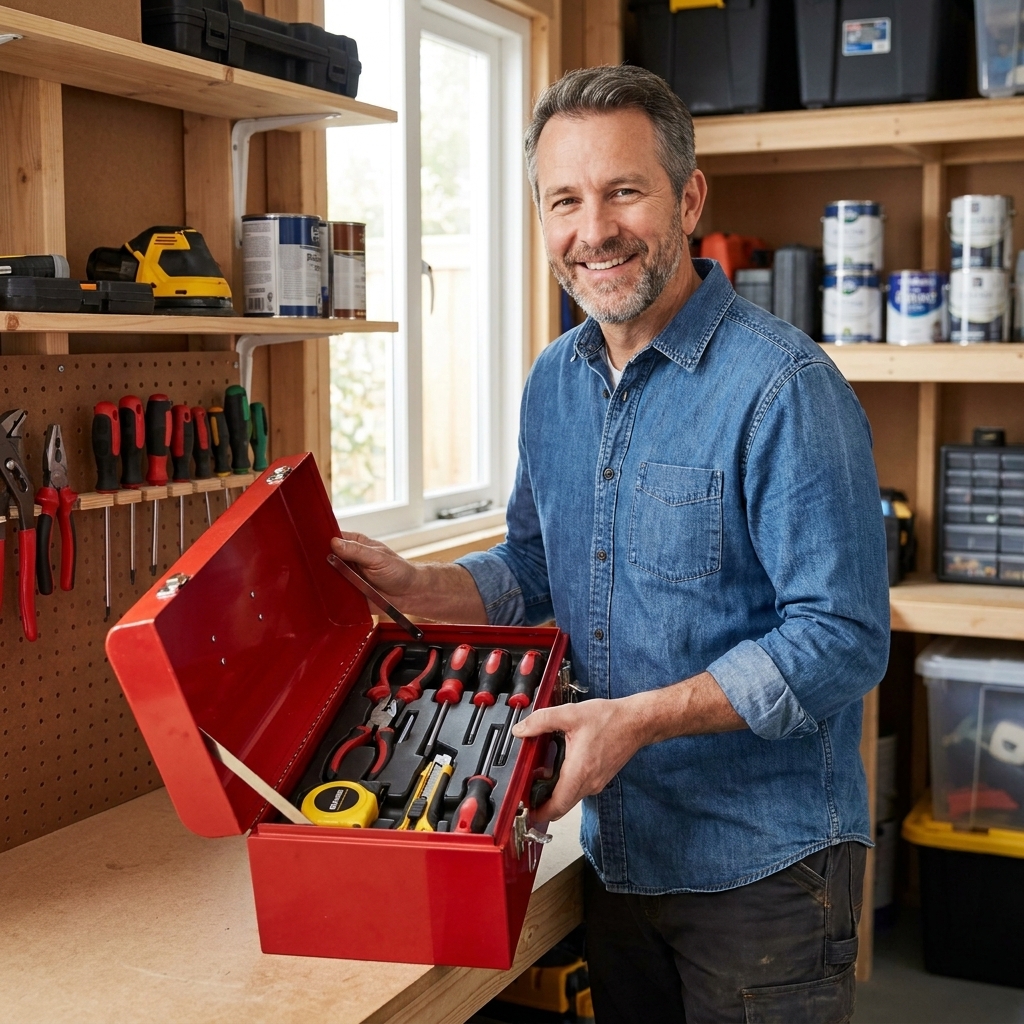
The best tool kit is the one you can find. A small toolbox, open tote, or even a five-gallon bucket with a tool organizer works.
- Keep it close to the action: a hall closet, laundry room shelf, or garage wall hook.
- Group by function: “fasteners” (drivers, hex keys, bits), “plumbing” (wrench, pliers), “patching” (putty knives, knife).
- Add a tiny parts box: spare picture hooks, a few drywall anchors, common screws. It saves trips to the hardware store for one lonely fastener.
Quick FAQ
Should I buy a pre-made homeowner tool set?
A decent set can be a good start, especially if it includes full-size screwdrivers and pliers. Just watch out for kits packed with tiny novelty tools you will never use. I would rather you own 10 solid tools than 100 questionable ones.
Do I need metric and SAE tools?
For hex keys, yes. Furniture and fixtures can be either. For wrenches, an adjustable wrench covers a lot, but if you later add a socket set, consider both systems.
What is the one tool people skip and regret?
A level. People try to “eyeball it,” then spend the next year staring at a slightly crooked picture frame like it is judging them.
Bottom line
If you stock these 15 hand tools, you can handle a surprising amount of home maintenance without calling for backup. Start small, buy decent quality where it counts, and keep everything in one place. Future-you, holding a flashlight for your own project, will be very proud.