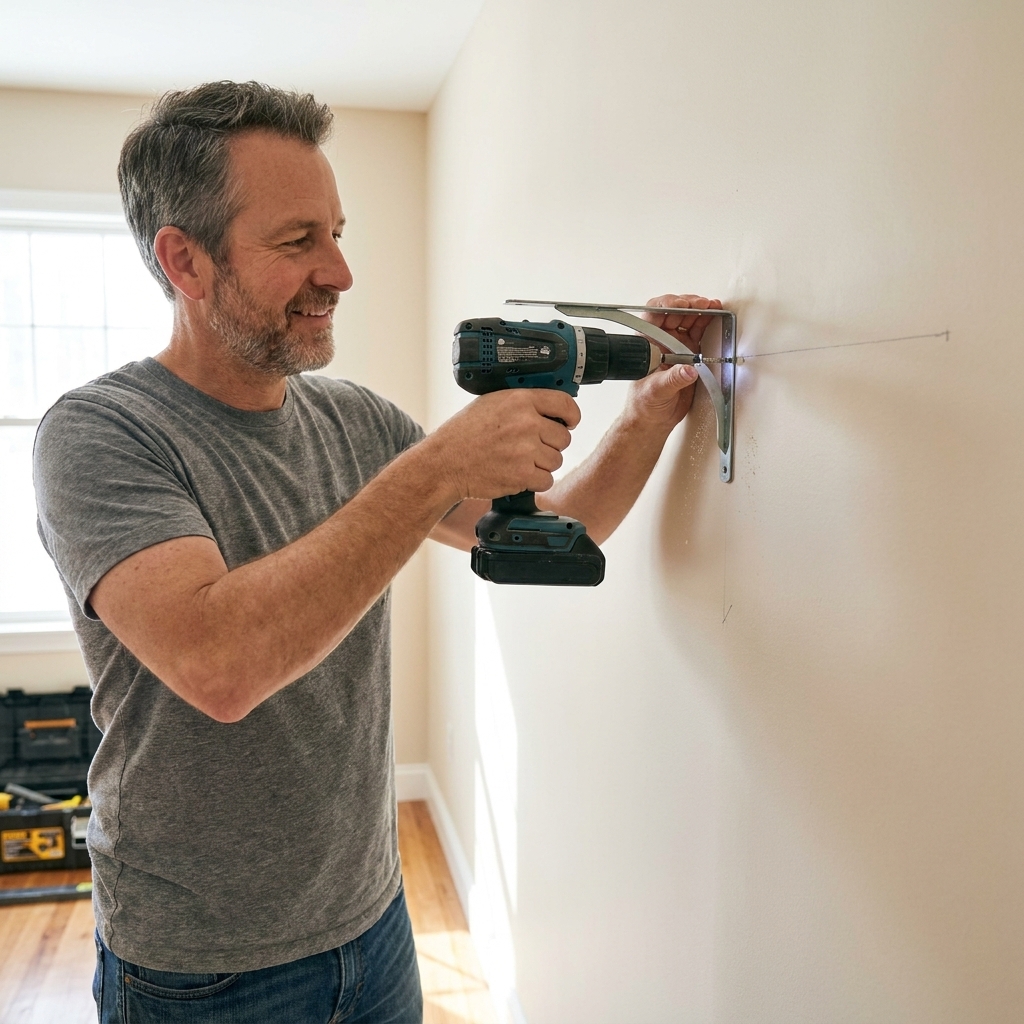
Build a reliable homeowner tool kit with these 15 hand-tool essentials. Includes what to buy, what to skip, and the repairs each tool handles best.
home improvement and DIY
12V vs. 20V Cordless Drills

Marcus Hayes
Marcus Hayes is a lifelong DIY enthusiast and former residential carpenter who has spent the last decade renovating his 1970s fixer-upper. Through Tinksmith, he shares his hands-on experience to help fellow homeowners tackle repairs, choose the right tools, and build spaces they love without breaking the bank.
Published October 17, 2026
Updated October 17, 2026
If you have ever stood in the tool aisle holding a compact 12V drill in one hand and a beefy 20V drill in the other, you have already discovered the hard truth of DIY: the “right” tool depends on the job. I have owned and used both while renovating my very 1970s, very stubborn fixer-upper, and the best advice I can give is this: buy the drill that fits the work you actually do, not the work you daydream about doing someday.
Let’s break down what 12V and 20V cordless drills really mean, what they are good at, and how to choose without overbuying or getting stuck with a drill that taps out halfway through your first weekend project.

What 12V and 20V really mean
Voltage is a rough indicator of a cordless tool system’s potential power. In plain homeowner terms, higher voltage platforms are typically built to deliver more torque and handle bigger bits, longer screws, and tougher materials.
A quick reality check on “20V”
Most brands labeled “20V Max” are describing the battery’s peak voltage right off the charger. Under normal load, it operates closer to 18V. That is why some brands call their platform 18V and others call it 20V Max. For shopping purposes, you can treat 18V and 20V Max as the same class.
Voltage is not the whole story
Two drills can share the same voltage and feel completely different. What matters just as much:
- Torque (measured in in-lbs or Nm)
- Speed ranges (RPM, often 0 to 450 and 0 to 1,700-ish)
- Chuck type (most are 3/8 in or 1/2 in)
- Tool length and weight (your wrists will notice)
- Battery capacity (Ah) and battery style (compact vs. larger packs)
- Brushless vs. brushed motor
The big differences
Power and torque
20V drills generally win on torque. They are better when the bit binds, the wood is dense, the screw is long, or you are driving fasteners all day.
12V drills are plenty strong for most “around the house” tasks, but they have a ceiling. When you start boring larger holes, using spade bits in studs, or sinking big structural screws, that ceiling shows up quickly.
Size, balance, and fatigue
This is where 12V drills shine. They are shorter front-to-back and usually lighter, which matters a lot inside cabinets, between studs, or when you are working overhead. If you have smaller hands or you just hate wrestling tools, a 12V drill can feel like a cheat code.
Battery life (and why it is complicated)
All else equal, a higher voltage platform can do more work per minute. But battery life depends heavily on amp-hours (Ah) and how hard you push the tool.
- A 12V 2.0Ah pack can feel surprisingly long-lasting for light work (pilot holes, small screws).
- A 20V 2.0Ah pack is often the “starter” battery, but it can drain fast under heavy drilling.
- If you expect longer runtime, look at 20V 4.0Ah to 6.0Ah (or bigger), or keep multiple packs.
Accessory compatibility and capability
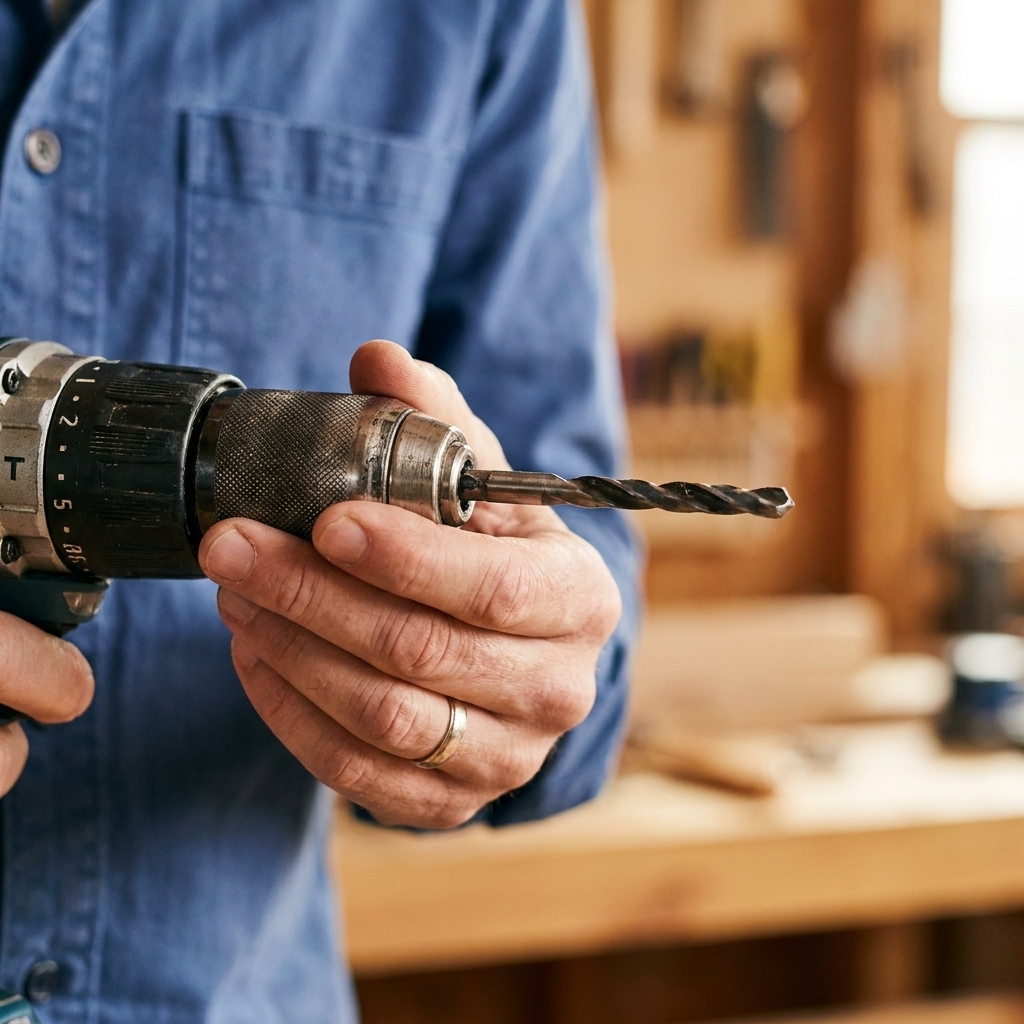
Many 12V drills use a 3/8-inch chuck. Many 20V drills come with a 1/2-inch chuck. A 1/2-inch chuck gives you more flexibility for larger shank bits and heavier-duty hole saw arbors.
Also, a lot of the accessories that really tax a drill (large hole saws, big auger bits) are simply more comfortable and safer on a 20V drill.
Best uses for a 12V drill
If your DIY life looks like typical homeowner tasks, a 12V drill can cover a ton of ground, and it is usually the drill you reach for first because it is easy to handle.
12V is great for:
- Furniture assembly and flat-pack builds
- Hanging curtain rods, blinds, towel bars, and hooks
- Cabinet hardware (pulls, knobs, hinges)
- Light duty shelving into studs or with anchors
- Pilot holes for most wood screws
- Small DIY projects like planter boxes, birdhouses, and simple repairs
- Tight spaces like inside vanities, closets, and between joists
Where 12V can struggle:
- Driving lots of long screws (think 3 to 4 inches) repeatedly
- Spade bits and larger holes in framing lumber
- Hole saws for plumbing or electrical pass-throughs
- Dense material like hardwoods, older framing, or wet pressure-treated lumber
If you want one sentence to remember: 12V is the comfort king, and it handles most small-to-medium tasks without drama.
Best uses for a 20V drill
A 20V drill is what I grab when the project shifts from “hang it” to “build it.” The extra torque is not just about strength, it is about control. The drill bogs less, you can run larger bits, and you are less likely to stall the tool when you hit a knot or a stubborn stud.
20V is great for:
- Deck repairs and exterior projects
- Framing and heavier carpentry tasks
- Drilling larger holes with spade bits, auger bits, or hole saws
- Driving structural screws like ledger screws and long construction screws
- DIY remodel work where you drill all day
- Mixing thinset, mortar, or paint (with the right mixing paddle and a drill that is rated for it)
Where 20V can be annoying:
- Overhead work for long periods (more weight)
- Tight cabinet corners (longer tool body and bigger battery)
- Delicate tasks where a compact drill feels more nimble

Drill vs. impact driver
Before you spend a dime upgrading voltage, consider this: a lot of people buy a bigger drill when what they really need is an impact driver.
- Use a drill for making holes and for precision driving where you want clutch control.
- Use an impact driver for driving screws, especially long ones, without killing your wrist.
My most-used pairing for home projects is a compact drill (often 12V) plus an impact driver (often 18V/20V). The drill does clean holes and pilot holes. The impact driver sinks fasteners like it is getting paid by the screw.
If you are only buying one tool today and you do mostly drilling, pick the drill. If you do lots of screw-driving, consider a kit that includes both.
Brushless vs. brushed
In many cases, a brushless drill can feel like a step up even if the voltage stays the same.
- Brushless benefits: better efficiency, often more torque, longer runtime, less heat, and generally longer motor life.
- Brushed benefits: cheaper up front, still perfectly fine for occasional use.
If you are choosing between a 12V brushless and a 20V brushed drill for light-to-medium home projects, the 12V brushless can honestly be the more pleasant daily driver. For heavy drilling and building, voltage and platform still win.
How to choose
Choose 12V if you mostly:
- Do indoor repairs and installs
- Assemble furniture and hang hardware
- Work in tight spaces
- Want the lightest tool you will actually use
- Prefer a drill that feels “easy” instead of “powerful”
Choose 20V if you often:
- Build projects from lumber
- Work outdoors (decks, fences, sheds)
- Drill big holes (spade bits, augers, hole saws)
- Drive lots of long screws
- Want one platform that can expand into saws, grinders, blowers, and other tools
If you can swing it, get both
If you are building out a tool collection over time, this is a combo that makes a lot of sense:
- 12V drill driver for 80 percent of household tasks
- 20V impact driver for heavy screw driving
- Optionally a 20V drill later if you start drilling larger holes regularly
Cost, batteries, and platforms
Here is the part no one puts on the box: batteries are the expensive part. The smartest long-term move is picking a platform you can grow into.
Look at the system, not just the drill
- If you want yard tools later, a 20V system usually has more options.
- If you want compact specialty tools for indoor work, many brands have excellent 12V lines.
Watch for these money traps
- Buying bare tools without enough batteries to support weekend work
- Mixing platforms across brands without a good reason
- Overspending on a premium drill when what you really needed was better bits
Also, spend a little love on your drill bits. A sharp, decent bit makes a “smaller” drill feel stronger. A dull bit can make a 20V drill feel like it is chewing through a fence post with a butter knife.
Safety and technique tips
- Use the clutch for driving screws. Start low, increase as needed. It prevents stripped heads and snapped screws.
- Use side handles if your drill includes one, especially for larger bits. When a bit binds, the drill can twist hard.
- Let the tool do the work. If you are leaning your full body weight into it, something is wrong: dull bit, wrong bit, wrong speed.
- Match speed to the job. High speed for drilling smaller holes. Low speed for larger bits and driving.
- Pre-drill in hardwoods and near board ends. It reduces splitting and makes driving smoother.
Common questions
Is a 12V drill strong enough for studs?
For drilling pilot holes and driving average screws into studs, yes. For repeatedly drilling larger holes in studs (like for plumbing or running cable), a 20V drill is the better and safer choice.
Can a 12V drill build a deck?
It can help, but I would not want it as my only tool. Deck work usually means lots of long fasteners and drilling in pressure-treated lumber. A 20V drill or, better yet, a 20V impact driver for fastening will make the job faster and less frustrating.
Does 20V automatically mean heavier?
Usually, yes, but not always. Brushless compact 20V drills have gotten smaller. Still, a 12V tool typically wins on tight-space access and comfort.
What about 3/8-inch vs. 1/2-inch chucks?
For most homeowner drilling, 3/8-inch is fine. If you plan to use bigger bits, hole saws, or want maximum versatility, a 1/2-inch chuck is worth it.
My bottom line
If your DIY projects are mostly repairs, installs, furniture, and weekend upgrades, a quality 12V drill is one of the most satisfying tools you can own. It is light, handy, and you will actually reach for it.
If you build with lumber, do outdoor projects, or regularly drill larger holes, go 20V. It is more capable, more expandable as a platform, and better suited to heavier work.
And if you are like most of us living in the real world, where one weekend is “hang a shelf” and the next weekend is “why is this wall wet,” consider the two-tool approach: a compact drill you love using, plus an impact driver for the tough fastener days. Your wrists will thank you. Your house will still find ways to surprise you, but at least you will be ready.